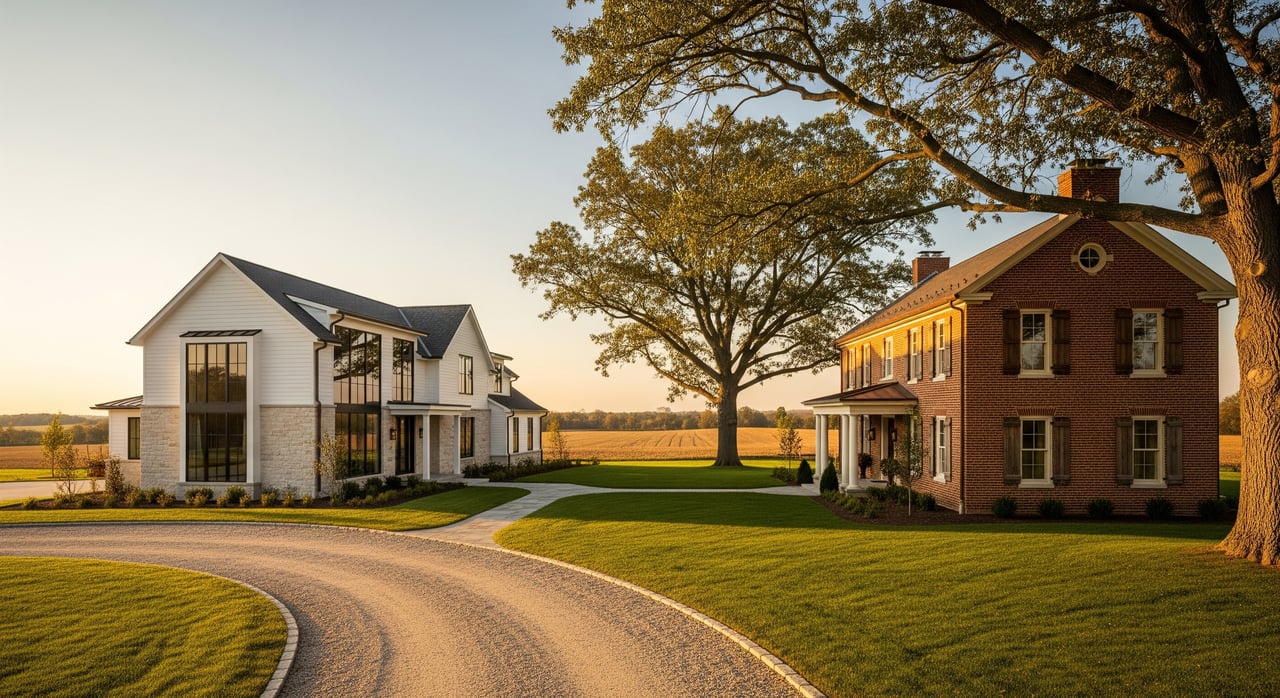
Thinking about a move in Commercial Point and torn between a new build and a resale home? You are not alone. The right choice comes down to your timeline, budget, and how much customization or immediate convenience you want. In this guide, you will learn the real pros, cons, and total costs to compare, plus local steps that keep you protected and on track. Let’s dive in.
Commercial Point market factors
Commercial Point sits within the greater Columbus region, so demand and pricing often reflect regional job growth, commuting patterns, and new-home activity. Because conditions change quickly, base your decision on the most recent local data. Check the Columbus-area MLS for current inventory and days on market, and review Village of Commercial Point permits for signs of active subdivisions and new supply.
Before you make any offers, verify the details that affect value and financing. Confirm utility status, property taxes, and any HOA rules for the specific address. Also, double-check school district boundaries for your property, as many homes in the area are served by Teays Valley Local Schools and assignments can vary by street.
New construction: what you get
Pros for buyers
- Customization options let you choose layouts and finishes that fit your lifestyle.
- New systems and appliances usually lower near-term maintenance.
- Modern building codes and energy-efficient materials can help reduce utility bills.
- Builder warranties provide added protection. Many builders offer a 1-year general workmanship warranty, a 2-year mechanical warranty, and a 10-year structural warranty. Always confirm specific coverage in writing.
Watch-outs and cost drivers
- Base prices can increase with lot premiums, structural options, and design upgrades.
- Build timelines can shift due to weather, permitting, or supply delays, which can impact rate locks and moving plans.
- Appraisals can be tricky if there are few recent comparable sales for your model and finish level.
- Allow for extra costs like landscaping, driveway finishes, window treatments, basement finishing, fences, and grading.
Financing and incentives
- Production builders may offer preferred lenders with incentives, including rate buydowns or closing credits. These change often and can improve your net cost.
- Custom builds may require construction-to-permanent financing. Ask lenders about draw schedules, contingency reserves, and rate lock options.
- Compare total out-of-pocket costs across lenders, including origination, points, and potential builder credits.
Inspections and warranties
- Schedule independent inspections, not just builder walk-throughs. A pre-drywall inspection and a final inspection help catch issues before closing.
- Get warranty terms and claim procedures in writing. Know how to submit punch-list items, response timelines, and what is considered normal wear.
Resale homes: what you get
Pros for buyers
- Quicker move-in with established comparables can simplify appraisal and negotiation.
- Established neighborhoods may offer mature landscaping and unique architecture.
- You may pay less up front than a new build if you are open to making updates over time.
Watch-outs and cost drivers
- Older systems like the roof, HVAC, and water heater can be closer to replacement. Inspections are critical.
- Utility costs can be higher if the home is less energy efficient.
- Renovations take time and money. Budget for both, even if you plan to phase projects.
Financing and appraisal
- Conventional, FHA, and VA loans are common for resales. Some loan types require certain repairs prior to closing.
- If recent comparable sales are lower than list price, your agent can help present upgrades, permitted work, and energy improvements to support value.
Side-by-side: how to decide
Your timeline
- Choose new construction if you are flexible on move-in timing and can handle potential delays.
- Choose resale if you need to move quickly and want a shorter close.
Total cost of ownership
- New construction: start with base price, then add the lot premium, structural options, design upgrades, and site work. Include likely extras such as landscaping and fencing.
- Resale: factor in near-term repairs, renovation plans, and higher potential utilities. Add inspection items you plan to address soon.
Financing and appraisal risk
- New construction: ask your lender about construction-to-perm or builder incentives. Appraisal risk can be higher if nearby comps are limited.
- Resale: loan options are broad, and comparable sales are often easier to find. Appraisals can still be tight in fast-moving markets.
Warranty vs. price
- New construction: builder warranties add peace of mind and can reduce surprise costs.
- Resale: you may negotiate price or credits based on inspection findings to build your own cushion.
Location and lot specifics
- Confirm sewer vs septic, water source, and any special assessments. These influence costs and mortgage eligibility.
- Review HOA rules, design covenants, and dues. Ask about reserve funds and any planned assessments.
- Check floodplain maps and grading responsibilities. Drainage can affect insurance and maintenance.
Local to-dos before you choose
Use this quick checklist to protect your budget and timeline in Commercial Point:
- Village of Commercial Point: verify building permits, inspection schedules, tap-in fees, and any recent annexations or infrastructure projects.
- Pickaway County Auditor: review property tax records, assessed values, and any special assessments for subdivisions.
- Pickaway County Recorder: check for recorded deeds, easements, and restrictions that could affect use.
- Pickaway County Building Department: confirm permit history for resales and ensure major work was approved and inspected.
- School district assignments: verify current boundaries for the property with Teays Valley Local Schools.
- Utilities: confirm water, sewer, electric, and gas providers for the address, and whether the property uses public sewer or a septic system.
- Floodplain and drainage: review FEMA and county flood maps, and ask about grading and stormwater obligations.
Tips for Commercial Point sellers
If you are listing a resale home near new subdivisions, compete with value and clarity:
- Price against real options buyers see, including local new-construction models and incentives. Show how your home compares on size, condition, and net cost to the buyer.
- Make targeted updates and repairs. Focus on high-visibility fixes, safety items, and simple energy improvements.
- Document everything. Provide receipts for recent upgrades and permitted work to strengthen appraisal support.
- Prepare for inspections. Address common issues up front and consider a pre-listing inspection to control timing and surprises.
When new beats resale, and when resale wins
Choose new construction if you want tailored finishes, lower near-term maintenance, and warranty coverage, and if you are comfortable with a longer timeline. It is a strong option when comparable sales support pricing and when builder incentives improve your net cost.
Choose resale if speed, neighborhood character, and price flexibility matter most. If you can handle light updates and prefer established streetscapes, a resale can deliver value and faster occupancy. The best choice is the one that fits your timeline, budget, and long-term plans.
Ready to compare neighborhoods and actual numbers in Commercial Point? Our team combines local knowledge with a data-first process to help you run the total cost of ownership both ways. Whether you end up with a new build or a resale, you will feel confident in your decision.
If you want a clear plan for your next move or a precise read on today’s market, reach out. To get started, connect with Kim Kovacs and Partners, Coldwell Banker Realty for expert guidance, neighborhood insight, and your free home valuation.
FAQs
Is a new build always more expensive than a resale in Commercial Point?
- Not always. New homes often have higher base prices plus upgrades and lot premiums, but resales that need significant updates can equal or exceed the total new-build cost when you include renovation and maintenance.
What inspections should I order on a new home in Commercial Point?
- Schedule a pre-drywall inspection and a final independent inspection. Consider HVAC and duct testing, and specialty inspections for septic or wells if applicable. Get a written punch-list and warranty terms.
How do builder warranties typically work for new construction?
- Many builders offer a 1-year general workmanship warranty, a 2-year mechanical warranty, and a 10-year structural warranty. Coverage varies, so review the contract, claim process, and response timelines.
How should I compare total costs between new and resale homes?
- For new builds, add base price, lot premium, options, and site work, plus likely extras like landscaping and fencing. For resales, add near-term repairs, planned renovations, utilities, and insurance.
What local records should I check before buying in Commercial Point?
- Verify permits with the Village of Commercial Point and the Pickaway County Building Department, review taxes with the Pickaway County Auditor, check deeds and easements with the Recorder, and confirm utilities and school assignments for the specific address.