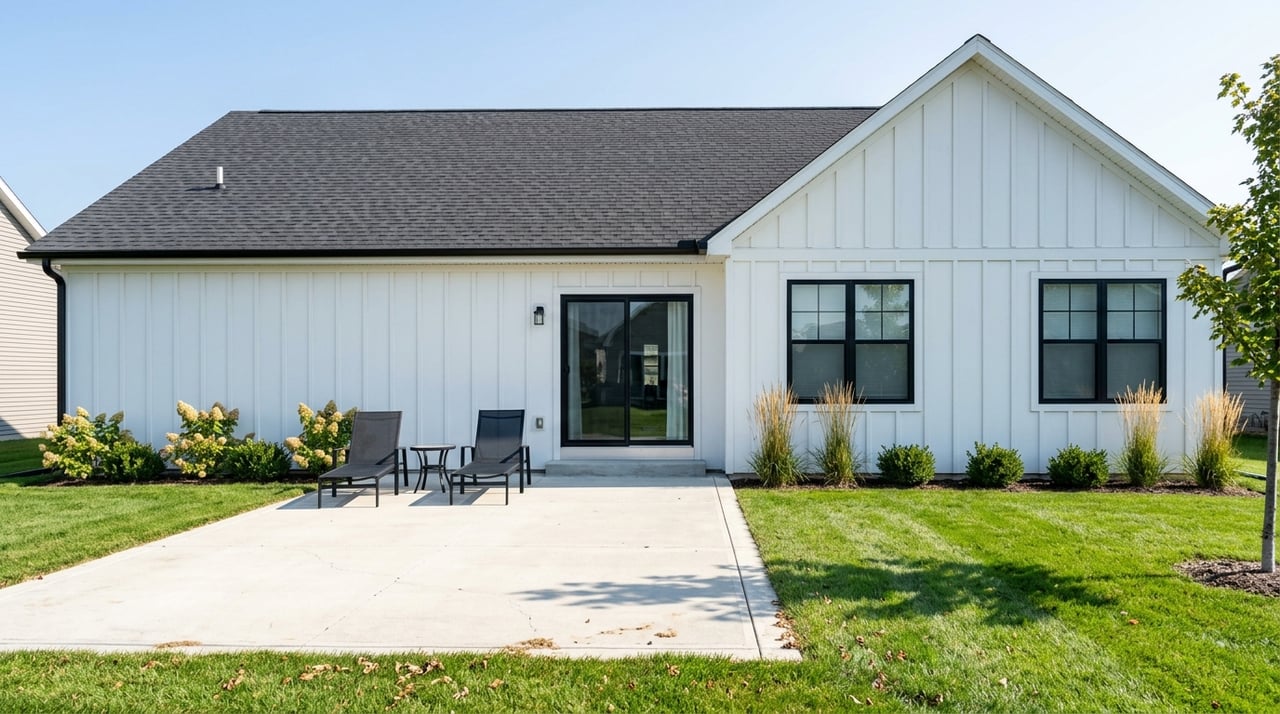
Should you buy a starter home now or stretch for a place you can see yourself in for years? If you are looking in Grove City, you have solid options in both lanes, and the right choice depends on budget, space needs, commute, and how long you plan to stay. You want a clear, local picture so you can move forward with confidence. In this guide, you’ll get Grove City price context, neighborhood patterns, and a simple decision framework to help you choose what fits best.
Let’s dive in.
Grove City market at a glance (Feb 2026)
Local price gauges cluster in the low-to-mid $300Ks, but each metric measures something different. As of late February 2026, Zillow’s Home Value Index (ZHVI) shows a typical Grove City home value near about $326,000. Redfin’s median closed-sale price is about $340,000 for February 2026, while Realtor.com’s median list price sits around $369,000 in the same period. The spread exists because ZHVI is a smoothed value estimate, Redfin reflects recent sold prices, and Realtor.com tracks asking prices.
On the ground, you’ll find a modest number of active listings and reasonably quick movement for well-priced homes. Sale-to-list ratios often hover around 98 to 99 percent. Reported days on market vary by source, so rely on current MLS data for timing when you are ready to write offers. The takeaway: pricing power is steady, and preparation matters.
What a starter home looks like in Grove City
Typical options under $300K
If you are targeting a first home, you will usually shop condos, townhomes, smaller ranches, and older three-bedroom houses under $300,000. These homes tend to trade some interior size or modern finishes for a more approachable price. Expect smaller lots, older systems, and some near-term updates.
Across the city, many for-sale lots cluster around roughly 0.17 to 0.19 acres, and many homes fall near 1,900 to 2,000 square feet. In the sub-$300K range, interiors are often smaller than that median and finishes may be earlier-generation. That can be a smart tradeoff if you want a lower payment and room to build equity.
Where value shows up
Older pockets near Grove City’s walkable downtown and areas closer to I-71 and I-270 can offer strong convenience with smaller yards. If your priority is cutting drive time to Columbus job centers, homes near major routes help keep your commute manageable. The typical one-way travel time for Grove City residents is about 21.6 minutes, according to the DataUSA travel time snapshot.
Parks and access also matter when you think about resale later. For example, proximity to places like Scioto Grove Metro Park is a lifestyle plus many buyers value.
Longer-term and “forever” options
The $300K–$450K band
Many three to four-bedroom single-family homes with 1,600 to 2,400 square feet sit in the roughly $300,000 to $450,000 range. These are the houses that can function as a longer-term fit for a lot of households. Layouts often include an extra bath, a flexible room for an office, and a more usable yard, which can save you from moving again in three to five years.
Neighborhoods with newer resales and community amenities are common in this band. You will see options across a range of subdivisions, and price expectations vary by pocket. Your agent can pull recent MLS sales to show how list and sale prices line up in each area.
$450K and up: new build and larger-home picks
If you want to stretch into a home you could see yourself in for a decade or more, plan on $450,000 and up for larger lots, newer construction, or custom features. Master-planned communities and recent builds often land here, with builders like Rockford Homes’ Meadow Grove Estates North offering newer floor plans and builder warranties. In and around the Beulah Park redevelopment area, you will also find walkable designs and newer product as part of Grove City’s growth, highlighted in regional construction coverage.
New construction typically trades lower near-term maintenance for slightly denser lots, while older resales can offer more land or character at the cost of updates. The right move depends on how you balance budget, yard size, and near-term projects.
Key decision factors for Grove City buyers
Commute and daily life
Grove City sits about 7 to 11 miles southwest of downtown Columbus with convenient access via I-71 and I-270. If commute time is a top priority, focus on neighborhoods near those routes or closer-in pockets where you can shave minutes off the drive. If yard size or a quieter street is more important, you might look a bit farther from the interstates.
Schools and family planning
Homes in Grove City are served by the South-Western City School District. For some buyers, school assignment is a key factor. Pricing can differ by neighborhood and school-area comparables, and the Columbus REALTORS regional report often separates medians for Grove City municipality and the district. If schools are part of your decision, review the district’s resources, then pair that with recent local sales so you understand value by area. Keep language neutral as you compare options and use your agent for objective, data-based guidance.
Taxes and recurring costs
Franklin County property taxes vary by taxing district and levy. For any address you are considering, use the Franklin County Treasurer’s tax estimator to preview the bill. Public survey data shows median owner-occupied property taxes in Grove City around $3,200 per year, roughly about 1 percent of the city’s median property value. Your exact tax will depend on where the home sits and its assessed value, so use the estimator for real numbers.
Cost-of-ownership tradeoffs to plan for
Maintenance and renovations
A common rule of thumb is to budget around 1 percent of the home’s value per year for routine maintenance. National homeowner cost studies place typical maintenance in the 0.8 to 1.0 percent range, with discretionary improvements on top of that. If you choose a starter home, expect some near-term projects. If you buy newer construction, you’ll likely pay more up front and less for early repairs. For a helpful overview of ongoing ownership costs, see this national maintenance cost summary.
New build vs. resale
New homes often come with builder warranties, modern systems, and energy-efficient features, which can reduce early repair risk. Lots may be smaller in newer, walkable projects, and prices usually start in the mid-to-upper $300Ks in Grove City. Resale homes can offer value and larger yards but may require a roof, HVAC, or electrical updates on a shorter timeline. Balance price, timing, and appetite for projects before you decide.
Starter vs. forever: your Grove City checklist
If you are leaning starter home
- Set a realistic price target under $300K. Expect smaller interiors and older systems, and plan for updates. When you are ready to tour, have your agent pull the latest MLS activity and days on market by pocket.
- Explore low-down financing. FHA allows as little as 3.5 percent down. Read the basics in the CFPB’s FHA guide. Also look at 3 percent down conventional options like Fannie Mae HomeReady, and ask about any local down payment assistance.
- Budget for maintenance. Use the 1 percent per-year guideline as a starting point and set aside extra for first-year fixes.
- Prioritize the must-haves. Focus on safety, structural soundness, and layout. Cosmetic updates can come later.
- Think about the exit plan. Starter homes near parks, schools, and transportation tend to attract steady buyer interest. That can help when you sell and move up.
If you are leaning longer-term or “forever”
- Buy for the next 7 to 10 years. Prioritize bedroom count, flexible spaces, yard size, and storage so you are not forced to move again soon.
- Model the real monthly payment. Include principal, interest, taxes, insurance, HOA, and potential PMI. Use the Franklin County tax estimator to dial in taxes for specific addresses.
- Compare new vs. newer resale. New builds can reduce early repair risk and include warranties; resales may offer more land or mature landscaping.
- Look at community fit. Consider amenities, commute routes, trails, and parks. If a home meets your core criteria and you can comfortably afford it, paying more up front can beat two moves in five years.
Quick scenario thinking
- If your budget caps under $300K, expect to trade yard size or updated finishes for affordability. You can build equity and revisit a move in a few years if your needs change.
- If you can stretch to $300K–$450K, you will see many three to four-bedroom homes that can work for the long run, especially in subdivisions with newer resales and community amenities.
- If you want larger living areas, a bigger lot, or the lowest near-term maintenance risk, plan for $450K and up and consider newer construction or custom homes.
A local guide for a confident decision
Choosing between a starter and a forever home is easier with clear data and a trusted advocate. Kim Kovacs and Partners has helped more than 1,700 Central Ohio buyers and sellers reach the finish line, with lifetime sales near $294M and an asking-price capture rate around 99.5 percent. We pair neighborhood-level insight with disciplined systems so you can move at the right time, at the right price, with fewer surprises.
If Grove City is on your shortlist, let’s talk about your timeline, budget, and must-haves. We will map neighborhoods, pull hyperlocal comps, and model total monthly costs so you can choose with confidence. Connect with Kim Kovacs and Partners, Coldwell Banker Realty to start a no-pressure conversation.
FAQs
What can a $300K budget buy in Grove City?
- You will typically find condos, townhomes, and smaller or older single-family homes. Expect to trade yard size and newer finishes for a lower payment, and verify up-to-the-minute options with current MLS data.
Are Grove City home prices rising or cooling right now?
- Signals are mixed. As of February 2026, a smoothed value index shows modest year-over-year gains, while some months of closed-sale medians trend differently. Use your agent’s MLS comps for the most current closed-sale trend in the pocket you are targeting.
How much should I budget for property taxes in Grove City?
- Taxes vary by taxing district and assessment. A practical starting point is the Franklin County tax estimator. Public survey data shows a local median near $3,200 per year, but your actual bill may differ.
Do I have to pay more for a larger yard in Grove City?
- Usually yes. Many city lots cluster near 0.17 to 0.19 acres. Larger lots are more common on the suburban edge or older rural-style parcels and tend to command a premium.
What is the typical Grove City commute to Columbus?
- The average one-way commute for Grove City residents is about 21.6 minutes, per DataUSA. Homes near I-71 and I-270 can shorten drive times if that is a top priority.